
100 Years of Horror: Part 2
Guest Writer: Edward October, Creator and Host of Octoberpod

EDWARD OCTOBER’S 100 YEARS OF HORROR
Recently, my podcast, Octoberpod AM, celebrated its 100th Episode. And so, by way of celebrating this milestone, I thought I’d be a gas to share with you my favourite horror films from the last hundred years (1926-2026) … spotlighting 1 film per decade and digging into some of the historic trends and socio-political themes lurking beneath the surface. Last time, covered what I think of as the Golden and Silver Ages of horror, which, by my reckoning, ended with the release of NIGHT OF THE LIVING DEAD and ROSEMARY’S BABY. Now it’s time to see what happened in the Bronze Age of Horror … Let’s continue, shall we?
100 YEARS OF HORROR – PART 2
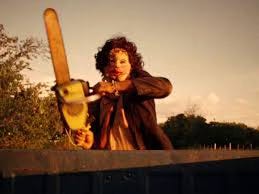
THE 1970s – I’m not the first to describe the 70s as the “hangover” resulting from the mad delirium of the late 60s. Many of the same tensions and anxieties remained … the horrors of the Vietnam War continued to plague the minds of writers, artists, and filmmakers like an inky shroud. Soldiers—the ones who lived—began returning home … but they didn’t come home … whole (either physically or spiritually). Pieces of them were left behind on foreign battlefields. These shattered homecomings made for shattered family units … and the movies, esp. horror movies, turned their lenses inward to examine twisted psyches and disintegrating family units. Bob Clark—the Canadian director best known for PORKY’S, the disturbing proto-slasher BLACK CHRISTMAS, and also the delightful A CHRISTMAS STORY—examines this very phenomenon in his “monkey’s paw”-inspired thriller DEATHDREAM. Post Vietnam disillusionment & the breakdown of traditional families show up in many of the brutal and nihilistic horror films of the 70s, from THE TEXAS CHAIN SAW MASSACRE to THE HILLS HAVE EYES. The 70s, thanks to the cultural phenomenon that was THE EXORCIST, were also the decade of Devil Movies. Cinemas & drive-ins were stuffed to their pea-soup-spewing-gills with countless Exorcist rip-offs like ABBY, THE TEMPTER, THE DEVIL’S RAIN, and BEYOND THE DOOR (just to name a few). Hell, even pictures that weren’t intended as Exorcist clones were re-cut and/or given alternate titles to cash in. That’s why Mario Bava’s haunting LISA & THE DEVIL was defiled to become HOUSE OF EXORCISM, and how the thoughtful, experimental vampire romance GANJA & HESS became known in some markets as DOUBLE POSSESSION.
The 1970s were also a time of decline for classic horror. Audiences were hungry for edgier fare, and films about classic monsters fell out of favour among adolescents. Hammer, struggling to find financing partners esp. in the States, limped along with attempts to make their gothic thrillers more relevant to the 1970s by exploiting already-off-trend pop culture tropes (as in DRAULA AD 1972) or by upping the ante in the sex and nudity department (see THE VAMPIRE LOVERS and its sequels). My pick for the 1970s is both a Hammer movie AND a post-Exorcist devil movie … it was made in 1976, but it’s the type of picture Hammer should’ve been making ten years earlier … and sadly, it was their last.
TO THE DEVIL … A DAUGHTER.
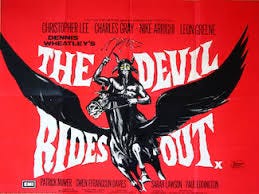
On paper this should’ve been the picture to turn the tide for Hammer: it had a great cast including Richard Widmark, Goldfinger’s Pussy Galore herself Honor Blackman, Denholm Elliot, a young Nastassja Kinski, and Christopher Lee in what is arguably his most disturbing role as an excommunicarted priest-turned-devil-worshipper; it was shot on location in and around London and, thanks to German co-financing, Lake Chiemsee in Bavaria; it was loosely based upon a novel by Denis Wheatley, whose THE DEVIL RIDES OUT had been previously adapted by Hammer to great crtical acclaim; it was subversive and gritty and for the first time since the late 1950s, Hammer had hit upon the bleeding edge of the horror genre. On paper, it was a sure thing. Unfortunately, the pages of the script were written on pink, or red, or blue paper … because scenes were being written hours, perhaps minutes before being shot. As a result, the picture makes little narrative sense, and ends anticlimactically with Christopher Lee’s character—characterized as a master of occult skill and satanic evil—is dispatched when a character throws a rock at him; and with Kinski’s characters giving birth (in reverse!) to demon baby that looks like a rubber hand puppet (because it IS a rubber hand puppet). The problems didn’t end there. American character actor, Richard Widmark—cast against type as a scholarly expert on the occult, and working solely for the money as he felt the material beneath him—was difficult to work with and by all accounts from the British cast & crew was a right bastard the whole time. Additionally, Christopher Lee’s longtime stunt double, Eddie Powell, suffered burn injuries in the performance of a stunt. With all of this being said, TO THE DEVIL … A DAUGHTER is well worth checking out. The picture has a slick, big-budget sheen to it; Lee is in TOP form and genuinely menacing; many of the set pieces are shocking and disturbing; and the atonal music score by Paul Glass is genuinely haunting. This picture is significant because it marked the death of Hammer, and is (in my mind) one of the mile markers at the end of the road for the classic horror era. It’s a shame, too, because it’s a unique glimpse into what Hammer could’ve produced in the late 70s and beyond … if only they’d managed to evolve with the changing times, rather than clinging to the old formula. TO THE DEVIL…A DAUGHTER is available in the US on a handsome Scream Factory blu, and I recommend seeing it on disc to watch the documentaries and featurettes … because the story of HOW this picture was made is at least as fascinating as the picture itself.
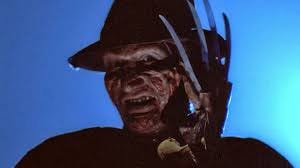
THE 1980s. Culturally speaking, the 80s were a decade of excess; a decade when Americans collectively turned a blind eye to their problems and focused on having a good time. During the 80s, greed was good, and consumerism was King. But horror films NEVER turn a blind eye to society’s ills. John Carpenter’s blackly comical THEY LIVE exposes the “feel good 80s” for what they were: a façade made to control the masses and ensure that they—that we!—Consume, Obey, and Submit. The 80s are fondly remembered by horror fans—esp. Gen Xers like myself—who came of age and fell in love with the genre during this decade. This is due, in great part, to the advent of home video, which revolutionized every corner of the movie industry. Horror fans congregated inside the local video rental store, and suddenly, new galaxies of cinema were now just a 3-night rental away! Horror pictures, which once played only on late-night TV or in grindhouses or art houses or NOT AT ALL in the United States, were made available to rent, watch, and re-watch. This is also a beloved decade for horror cinema because, well … it produced hit after hit after hit. From POLTERGEIST to the ELM STREET FILMS to Stephen King adaptations and HELLRAISER … there was no shortage of juicy red meat for horror fans to sink their fangs into. The 80s were rich with an endless string of slasher films and gut munchers, but just beneath the surface, one could still find horror creators tackling issues like long-simmering nuclear tensions, race & inequality, sexuality & gender identity, and the AIDS epidemic. My pick for the 1980s is a picture which was timely in 1983 and which is even more relevant today.
VIDEODROME
Canadian auteur and godfather of venereal horror, David Cronenberg, birthed VIDEODROME during the heyday of the “video nasties” in the UK when panic & moral crusades against sex, violence, and sexual violence were garnering headlines on both sides of the Atlantic. The story of VIDEODROME concerns a sleazy TV exec whose life descends into psycho-sexual surreality & murder after he watches a pirate broadcast of an underground torture/snuff program called …Videodrome. Did the strange broadcast expand his consciousness? Are the body horrors he sees and experiences real? Or is it all a hallucination … a byproduct of being programmed by Videodrome to become a political assassin? In the 80s, VIDEODROMS served as a commentary on the effects that watching violence and sadism has on the psyche, and about the media’s ability to manipulate the masses. Today—in the age of social media rage baiting, PizzaGate, QAnon, AI and deepfakes—this picture is more urgently relevant than ever! VIDEODROME is pretty easy to find, but Criterion recently released it on 4K … tho I hear that the Arrow Video release is a cracking good disc, as well.
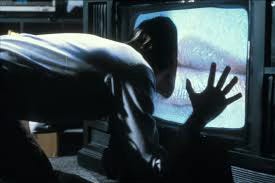
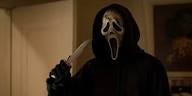
THE 1990s. If the 70s were the hangover from living through the 60s, then the 90s were a period of disillusionment. Society peeled away the bright, neon wallpaper of the 80s to reveal the rotting, mouldy framework lingering just beneath the surface. (David Lynch, to his credit, was ahead of the curve when—in 1986s BLUE VELVET—he showed us the maggoty, severed ear hiding beneath the bright green grass of a perfectly manicured suburban lawn.) The 90s were all about government conspiracies and disillusionment. Thanks to the influence of THE SILENCE OF THE LAMBS and trend-setting TV shows like THE X-FILES & Lynch’s own TWIN PEAKS, horror films became police procedurals with FBI agents and serial killer profilers uncovering either vast conspiracies or depraved killers hiding in plain sight. Wes Craven, who helped reinvent the horror genre in the 70s with THE LAST HOUSE ON THE LEFT and THE HILLS HAVE EYES and again in the 80s with NIGHTMARE ON ELM STREET, turned the genre on its head once more with SCREAM … a sharp, über-hip, and comically self-aware revisionist slasher film. And just as THE EXORCIST had done with the sub-genre of “Devil Pictures™” two decades earlier, SCREAM ushered in a glut of snarky, self-aware, teeny-bopper slashers that dulled the impact & razor sharp of wit of SCREAM almost instantly. Thanks to SCREAM and Best Picture Oscar winner SILENCE OF THE LAMBS, horror was becoming mainstream and (dare I say) a bit sanitized. My knee-jerk reaction when thinking of 90s horror is to say it’s my least favourite decade for horror cinema … But that’s unfair because one of my favourite pictures of all time—THE BLAIR WITCH PROJECT—was a product of the 90s. So were the sublimely downbeat & cerebral thrillers CANDYMAN and THE EXORCIST 3. All the Famous Monsters of Filmland from WOLF, to BRAM STOKER’S DRACULA, and MARY SHELLY’S FRANKENSTEIN returned to screens in big, beautifully flawed epics. Hell, even THE MUMMY made a splash in the 90s with a rollicking, two-fisted, Indiana-Jones-style action adventure. This was a decade that millennial horror fans discuss a lot. So I’m going to take a moment to shine a spotlight on a 1993 picture that often gets overlooked…
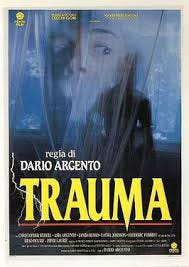
Dario Argento’s TRAUMA
Lemma tell ya … it was hard being an Argento fan in the early to mid-90s. I found SUSPIRIA at my local video store (I recognized the names “Dario and Claudio Argento” from many repeat viewings of DAWN OF THE DEAD); I popped that joker into the VCR, and from the moment I heard those intense Goblin drum riffs over the opening credits … my life was forever changed. At that moment, I became a fiend, eager for my next fix. The only problem was that aside from SUSPIRIA, CREEPERS (which was the American edit of PHENOMENA), and DEMONS (which Argento only produced), I couldn’t get my clammy hands on ANY of il maestro’s films … and as for uncut editions: forget it! That’s why I was so excited when I discovered TRAUMA. This was Argento’s first, and really only, attempt to make an American feature film. TRAUMA was shot on location in and around Minneapolis; the screenplay—a giallo-style thriller involving a troubled, annorexic teenager, a TV news producer, and a serial killer called The Head Hunter—was co-written by American horror novelist TED Klein; Tom Savini povided the gore FX; and Argento’s daughter Asia headed up a cast that was filled with character actors familiar to American audiences, including Brad Douriff, Piper Laurie, Frederick Forrest, and James Russo. Like TO THE DEVIL … A DAUGHTER, TRAUMA has a lot going for it on paper … but doesn’t quite stick the landing. For starters, leading man Christopher Rydell is rather bland. But anyone who has watched and enjoyed Argento’s earlier film, INFERNO—despite a limp-as-a-dish-rag performance from star Leigh McClusky—knows that a bland male lead is not necessarily a deal-breaker. Speaking of bland, the anonymous earth-tone locations of Minneapolis don’t help matters … esp. when audiences are expecting the garish, technicolour art nouveau environments of SUSPIRIA or the icily modern homes and piazzas of TENEBRAE’s version of Rome. One critic—I believe it was Maitland McDonaugh in her book Broken Mirrors/Broken Minds: The dark dreams of Dario Argento, but don’t quote me on that—noted that Minneapolis was a city with no past and no future, and it certainly shows. Finally, the score was written by Brian De Palma's regular, Pino Donaggio. Now, Donaggio is a great composer, with a tendency towards lushly romantic and sensual compositions that act as counterpoints to the horrific images splattered on the screen. Go watch Nicolas Roeg’s DON’T LOOK NOW or DePalma’s CARRIE and DRESSED TO KILL to see what I mean. But with TRAUMA, Donaggio’s score seems out of place—much like Argento’s baroque sensibilities—and contributes to the picture’s inconsistent tone. The sensuality and romanticism one would expect from a Donaggio score are mostly absent (or watered down), and replaced with some really galumphing shock/suspense cues. In spite of all of these flaws, I still contend that TRAUMA has a lot going for it and that many of the things one would expect from one of Argento’s gialli are present. I mean, where else can you see Brad Douriff’s still-living severed head plummeting toward oblivion at the bottom of an elevator shaft? Hell, if the story had been set & shot somewhere in Europe instead of middle-America, and scored by Ennio Morricone or Goblin or Claudio Simonetti … we’d be speaking of TRAUMA in the same breath as Argento’s earlier giallo masterpieces DEEP RED and TENEBRAE. Go see TRAUMA however you can—it was streaming on SHUDDER not long ago, and there’s a new Vinegar Syndrome 4K I’m thinking of picking up—because it’s long overdue for a critical reappraisal.
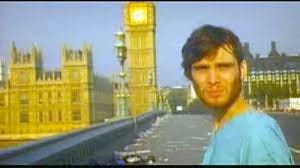
THE 2000s. One of the top US news stories in the spring and summer of the year 2000 was the disappearance and mysterious death of Federal Bureau of Prisons intern Chandra Levy, and the scandal surrounding her relationship with Congressman Gary Condit. Then--on a vibrantly blue-skied day in September--2 planes slammed into the World Trade Center, another crashed into the Pentagon, and a fourth crashed down in Pennsylvania. Every news story that had come before this day now seemed trivial. These acts of terror reshaped the world (for a time at least) in their image, and the United States entered a seemingly endless War on Terror in the Middle East. Famously, Danny Boyle’s politically conscious revisionist zombie film, 28 DAYS LATER, was filmed on cheap digital cameras while the 9/11 terror attacks were taking place. That film’s depiction of a post-apocalyptic London, its streets littered with carnage and debris, did not look all that dissimilar to Manhattan after the fall of the Twin Towers. Scenes of outdoor bulletin boards that’d grown hirsute with missing persons flyers for lost and presumed dead loved ones hit close to home. 9/11 was the first great tragedy of the internet age … the first great tragedy seen through the lenses of the cell phone cameras in every New Yorker’s pocket. Is it any wonder, then, that found footage horror films like PARANORMAL ACTIVITY, CLOVERFIELD, REC (and its American remake QUARANTINE) began to surface during the first decade of the 21st Century? It’s also little wonder that, as the 24-hour news cycle became increasingly filled with the atrocities of Abu Ghraib, waterboarding, and the widely circulated online beheadings of American citizens, horror films (like SAW and HOSTEL) became increasingly concerned with torture and abuse. The 2000s were a dark period in our shared history, and horror cinema held up a mirror to that darkness.
Apart from the march of history, Hollywood became obsessed with rebooting and remaking popular horror franchises, with varying levels of success: from the exhilarating highs of Zach Snyder’s DAWN OF THE DEAD … to the depressing lows of 2005’s THE FOG. Enter the right honourable Mr. Robert Zombie, who, after proving his horror filmmaking bona fides with THE HOUSE OF 1000 CORPSES and THE DEVIL’S REJECTS, was tasked with rebooting the thoroughly beaten and abused dead horse that was the HALLOWEEN franchise. Zombie’s HALLOWEEN was marginally successful, if a bit divisive. The first half of the picture is Michael Myers’ origin story … the second half is a fairly by-the-numbers retelling of John Carpenter’s classic. Divisive as it was, audiences agreed that it was an uneven, neither-fish-nor-fowl affair that functioned best when it deviated from the source material. Zombie’s “pre-boot” of HALLOWEEN is NOT my pick for this decade … but its sequel is.
HALLOWEEN II
I’m a big defender of this picture on social media, but I don’t think I’ve ever spoken about it on the podcast. The story takes place a year after the previous film and deals with Laurie Strode (Scout Taylor-Compton), having formed a de facto found family with surviving friend Annie Brackett (HALLOWEEN 4’s Danielle Harris …. now all grown up, but playing younger than her actual age) and her father Sheriff Brackett (Brad Douriff), and dealing with the PTSD and survivor’s guilt in the wake of Michael’s killing spree. HALLOWEEN ’07, due to studio meddling, couldn’t decide whether to follow Rob Zombie’s vision or John Carpenter's… but 2009’s HALLOWEEN II has no such conflict (despite a troubled production history filled with more studio meddling). This is Rob Zombie’s HALLOWEEN through and through, and isn’t afraid of taking liberties with slasher royalty. For starters, Michael Myers (played by the hulking Tyler Mane) is seen unmasked or wearing a battle-damaged version of that classic William Shatner mask that reveals half of his face … complete with one of Rob Zombie’s trademark hillbilly beards. Another choice (one that I’m not a fan of) that the film makes is to depict Doctor Loomis as an arrogant “fame whore” seeking to profit off Michael’s crimes & become a true crime celebrity. HALLOWEEN II is memorably filled with dream sequences filled with white horses, angelic visions of Michael & Laurie’s mother (Sheri Moon Zombie), and a skeletal Michael Myers crucified at the head of a “last supper” type dinner attended by grotesque creatures. All of these changes to the formula announce “this isn’t your parents’ HALLOWEEN movie” … but the most important way both of Zombie’s films distinguish themselves from what has gone before is how they depict violence. In a BTS featurette, Zombie states that he is bored by the ironic and/or semi-comic “creative kills” that slasher pictures are known for. In making these films, Zombie wanted to make the kills grittily realistic … and scary. In this, he succeeds. The violence is raw, sad, and often tragic. When I watch slashers, I usually find myself rooting for the killer … eager for him (it’s usually a “him”) to dispatch the most annoying characters. But the victims of Rob Zombie’s Michael Myers, no matter how annoying they are (and BELIEVE me, there’s no shortage of annoying muthafuckas in a Rob Zombie picture), become pathetic, pitiable figures in death. This is most evident in the (SPOILER!) death of Annie Brackett. We’ve grown to know her over two films, we have accepted her as a big sister figure to Laurie, and to horror fans, she feels even MORE like family because it’s not just Annie Brackett dying … it’s Danielle Harris dying, which reminds us of the troubled little girl from HALLOWEEN 4 and 5. It is a kill we don’t want to happen … and which we don’t want to see. It’s not fun … it’s tragic. But the true horror comes when her father, Sheriff Brackett, discovers her body … and holy shit. In this one scene, Brad Douriff gives the performance of a lifetime of unforgettable performances. Zombie cuts between the grief of a father and photographs of Danielle Harris as a child. That scene will rip your fucking heart out, man.
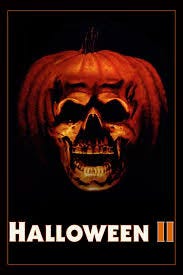
HALLOWEEN II is a film about violence and trauma … and it treats both subjects with gravity. Is it perfect? Absolutely not! It’s flawed in the same ways that all of Rob Zombie’s films are flawed: characters curse too frequently and too cleverly, Laurie (a character we’re supposed to identify with) comes off as too abrasive, the Loomis subplot is full of awkward humor, Zombie’s friends (cough Sheri Moon cough) are cast in roles which perhaps should have gone to more seasoned thespians, and too many characters are styled to have that “Rob Zombie” look. And yet, those of us who love it do so BECAUSE it is flawed. Horror is a messy business … and HALLOWEEN II is a darkly beautiful mess.
As we enter THE 2010s, the benefit of hindsight begins to fail me. I need a little more distance from this period to really see how the major historical events of the decade affected the evolution of the horrors depicted on the big screen. Surely the paradigm-shattering dumpster fire that was the—God help us!—The first Trump administration made its mark on horror, but it’s still too fresh to see what that was. Then at the end of this decade, the global COVID pandemic spread its black caul over the face of the world, and EVERYTHING changed. Outside of the proverbial “winds of change,” we saw streaming services truly take hold of the industry. All of the hot new horror films, from indie pictures to foreign films and made-for-streaming series & features, were available at our fingertips courtesy of Netflix, Amazon Prime, and others. It was the greatest shift in the industry since the advent of VHS and, ironically, dealt a mortal blow to cinemas and physical media … the repercussions of which we’re witnessing more than a decade later. This is the dawn of A24 and the “elevated horror film” … a buzzword that I still loathe because it gives people who don’t like horror movies permission to like a horror movie—so long as it’s arty and pretentious—while still looking down their noses at all the other “lowly” films within the genre. That’s not to say that horror films deemed to be “elevated” are not worthwhile. On the contrary, pictures like MIDSOMMAR, THE VVITCH, IT FOLLOWS, THE LIGHTHOUSE, Luca Guadagnino’s SUSPIRIA remake, and Jordan Peele’s GET OUT and US are all exemplary specimens of the spooky movie arts. On the *ahem* lower end of the spectrum, the 2010s offered crowd-pleasing chillers from Blumhouse (like the PARANORMAL ACTIVITY sequels), as well as James Wan’s THE CONJURING UNIVERSE, based (very loosely) upon the “true” exploits of acclaimed ghost hunters (and alleged charlatans) Ed & Lorraine Warren. I could pick any one of these pictures to spotlight as a representative for this decade. Instead, I’m going to spotlight a historic event…
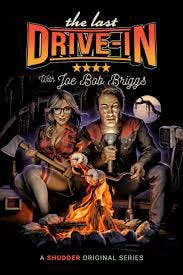
THE LAST DRIVE-IN with JOE BOB BRIGGS
Gen Xers & older Millennials will probably best know film critic and drive-in-movie aficionado Joe Bob Briggs as the host of MonsterVision on TNT in the 1990s. With that show, Joe Bob put a new spin on horror hosting with his “sophisticated redneck” persona, providing humorous and well-researched insights into all the films presented. In the summer of 2018, Joe Bob (with sidekick Diana “Darcy the Mail Girl” Prince) hosted “The Last Drive In” on Shudder, a horror-focused boutique imprint of the AMC+ streaming service. TLDI was a 24-hour, 13-film horror movie marathon presented as a live stream and was intended to be Joe Bob’s LAST horror hosting gig and his farewell. (I must confess that until researching this piece, I—like a 12-year-old Hulkamaniac who insists that professional wrestling is 100% real—assumed that Joe Bob & co. sat up for 24 hours to host this event … rather than pre-taping all the hosted segments.) The films presented were some of Joe Bob’s favourites & included TOURIST TRAP, SLEEPAWAY CAMP, THE LEGEND OF BOGGY CREEK, HELLRAISER and PIECES among many others. There are heartfelt moments of true poignancy, such as when Joe Bob becomes emotional while paying tribute to the late, pioneer of horror hosting…….. John Zacherle. The marathon ends on a note of finality, with Joe Bob literally hanging up his cowboy hat (presumably) for good. A moment, I must point out, that he delays by going off on a tangent about different styles of cowboy hats … as though he’s dragging his feet to close this chapter of his life. And yet … the drive-in never dies. TLDI proved so successful that it quite literally broke the internet when it drew an audience so large that it overloaded the servers at SHUDDER. Rabid fans watching the live stream—or at least those able to access it—bonded on social media, live tweeting about the show and interacting with the very online Darcy. And so a one-time event meant to be Joe Bob’s swan song caught fire. THE LAST DRVE IN was picked up by Shudder as a recurring series (I believe it is in its 7th season as we speak) and throughout its run has built its own community of horror fans (the Drive-In Mutants) complete with live drive-in events; established Shudder as a major player in the realm of streaming horror; and minted Diana Prince, SLEEPAWAY CAMP star & frequent guest Felissa Rose, and musical director John Brennan as genre icons in their own right; and week-after-week exposed casual horror fans (and experts alike) to some truly unique films they’d never encountered before. For this, and many other reasons, THE LAST DRIVE IN is one of the most significant things to happen to horror in the 2010s.
2020-2026. It’s a good thing THE LAST DRIVE IN united horror fans because in the early months of 2020, thanks to the spread of COVID-19, we were all about to become more isolated than ever. It was only 6 years ago, but now it feels like another lifetime. With social distancing protocols in place, movie and TV production slowed to a complete halt. No new movies or TV shows of any kind, unless they were produced BEFORE the pandemic or recorded by remote or virtual means. Shit was bleak. I have a distinct memory of renting a digital stream of Leigh Whannell’s INVISIBLE MAN remake (for a premium price!) instead of a theatrical release. Mrs. October & I tried to deck the family room out like a theatre and darkened the lights to watch it … trying very hard to turn it into an event while every other corner of our lives had become stagnant. We also did things like driving the car out to an empty parking lot (there were many empty parking lots at the time), setting up the portable DVD player like a DIY drive-in & watching a Disney movie with the kid. Speaking of drive-ins, that dying corner of the movie exhibition industry saw a bump during the pandemic … the only way to go out and watch a movie while observing social distancing. Shudder pulled through once again by streaming HOST, a “found footage-y” supernatural chiller, filmed remotely as video chats. (PAUSE) In unprecedented times, horror finds a way. It is now 2026, and the story of “what horror films were about in the 2020s” is still being written. The legacies of old masters like David Cronenberg, PSYCHO’s Anthony Perkins, and George A. Romero are being passed on to a new generation. Brandon (son of David) Cronenberg has directed disturbing, mind-bending fare like POSSESSOR; Oz (son of Anthony) Perkins has been changing the face of horror with thrillers as diverse as LONGLEGS and THE MONKEY; and George Romero’s daughter, Tina Romero, has put her own stamp on the modern zombie film genre her father created with QUEENS OF THE DEAD. Only 6 years in, the 2020s have produced some truly epic horror pictures … many that I feel will be remembered as “game changers” decades from now. Films like the aforementioned LONGLEGS and POSSESSOR, Robert Eggers’ NOSFERATU, GDT’s long-awaited adaptation of FRANKENSTEIN, Jordan Peele’s NOPE, and Ryan Coogler’s sublime revisionist vampire picture SINNERS. The 2020s have even produced some new sequels, prequels, and requels like ALIEN: ROMULUS, EVIL DEAD RISE, THE FIRST OMEN and FINAL DESTINATION: BLOODLINES, proving that these long-in-the-tooth franchises still have some bite left in them. I’m going to take a moment to say a few words about one such sequel that’s been on my mind since I left the theatre last summer …
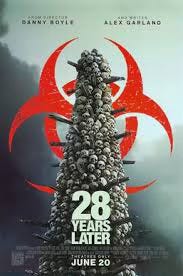
28 YEARS LATER
This picture is so recent that it would be a shame to spoil it for anyone, so I’m just going to offer up my somewhat disjointed impressions, which is not altogether inappropriate, given the events of the film. (BEAT) Anyone expecting a rollicking romp through a zombie apocalypse in this sequel to 28 DAYS LATER may be sorely disappointed. Instead, Danny Boyle and original screenwriter Alex Garland reunited to deliver a hautological picture that draws more from folk horror and even epic fantasy than from traditional zombie movies. And before you push your glasses up the bridge of your nose and utter the word “Actuallyyyyyyy,” let me clarify that YES I realize the “infected” of the 28 DAYS series are not true zombies … but they serve the same narrative purpose. In fact, the infected in 28 YEARS LATER behave even less like zombies than in the two previous films. Here, they’re depicted more like savage “first men” or like the Orcs from LOTR. Indeed, there are many references to Britain’s mythic, chivalric past, making the comparison to Orcs even more apt. The prominent, almost fetishistic use of Rudyard Kipling’s poem “Boots” on the film’s soundtrack also links the tale to 19th & 20th Century British imperialism. In the 2.8 decades since the first film, we learn that the rest of the world has moved on from the Rage Virus outbreak … everywhere but the British Isles, where the living and the infected have formed something of an equilibrium. The story centers on the inhabitants of a fortified island in the Scottish highlands, cut off from the mainland at high tide by a natural causeway. Now, if you’re a horror fan of a certain age (as I am), you’ll hear the words “Scottish island” and immediately think of 1973’s THE WICKER MAN. And like the villagers of Summerisle, the folk of 28 YEARS LATER have evolved their own strange rituals and traditions which include children wearing mummer’s masks representing the infected … who, to this community, are boogeymen akin to the goblins, ogres, and orcs of medieval lore. But the most interesting boogeymen of 28 YEARS LATER are Ralph Fiennes’ Dr. Kelson (a character who better embodies the spirit of Richard Matheson’s novel I AM LEGEND than many of its film adaptations have done) and Jack O’Connor’s track-suit-clad cult leader “Sir Jimmy Crystal” who, by all accounts, was based upon once-beloved British TV personality and loathesome serial rapist Jimmy Savile. For any Americans listening, imagine a celebrity who hosted all your favorite music programs (like Dick Clark or Ryan Seacrest) combined with your favorite late night talk show host (like Johnny Carson, Jay Leno or David Letterman), combined with your favorite game show host (like Bob Barker or Alex Trebek), and America’s most beloved comedians (like Jerry Seinfeld or Bill Cosby before his own fall from grace). Imagine that this celebrity championed charitable causes (like Paul Newman or George Clooney) and was a close friend to US Presidents and other heads of state. Now imagine that this imaginary, well-loved, highly-respected celebrity turned out to be Jeffrey Epstein, & I’ll you’ll get a good idea of how the Jimmy Savile scandal affected our friends in the UK. (BEAT) Boy was THAT a tangeant. Anyway, I have to stop myself before I rattle on about this picture any longer … It’s one of those rare films that will chill your spine, put you on the edge of your seat, and make you “ugly cry” before it’s over. Go see it, if you haven’t already, because a spin-off movie (Nia DaCosta’s 28 YEARS LATER: THE BONE TEMPLE) is set to be released later this month (it may even be out before you hear this)!
And there you have it … 100 Years of Horror! I realize that my perspective was, to a great extent, focused on the US, UK and Canada. That’s just where the bulk of my knowledge lies. There are galaxies of groundbreaking horror films to be found in other parts of the world. As a horror fan, I’ve barely scratched the surface of all the great Asian horror cinema there is to enjoy. The impact of fascist regimes on the horror genre in Italy, Spain, Germany and South America—not to mention horror films made from within the Soviet Union—is a subject that I have neither the time nor the expertise to unpack here. My god, I didn’t even mention Brazil’s Coffin Joe, the luchador monster mashes of Mexico, or the innovative horror films being made in Africa. These omissions are not meant to diminish the importance of these films … my limitations as a historian and a critic are solely to blame in this regard. I hope that if my ramblings have not been enlightening, they have at least been entertaining. If you were neither enlightened nor entertained, I can only say thank you for sticking with me until the end.
And thank you ALL for coming on this journey with me over the last 100 episodes. This has been the most fulfilling creative endeavour of my life, and I intend to keep doing this for another 100 episodes and beyond … until the orange pumpkin flesh rots off my fat pumpkin head. And so, until next time … stay spooky mes amis.
If you enjoy classic horror stories ... as well as the occasional deep dive into my retro horror pop culture obsessions, then check out Octoberpod AM. It’s the retro horror podcast for bold individualists, hosted by yours truly ... Edward October. Every two weeks, we present true, true-ish, and classic tales of horror and the paranormal with a retro-vintage aesthetic reminiscent of old-time radio and spoken word horror on vinyl. Find Octoberpod AM wherever you get podcasts, or on YouTube at Octoberpod Home Video. Follow us on the app formerly known as Twitter @OctoberpodVHS or find all our links on the World Wide Web at OctoberpodVHS.com
CLIPS & REFERENCES
28 Years Later –
TLDI on Shudder --
| https://www.reddit.com/r/LastDriveIn/comments/10qyo7f/is_the_last_drive_in_live_or_pre_recorded/
Halloween II –
Trauma --
Videodrome --
To the Devil … A Daughter --